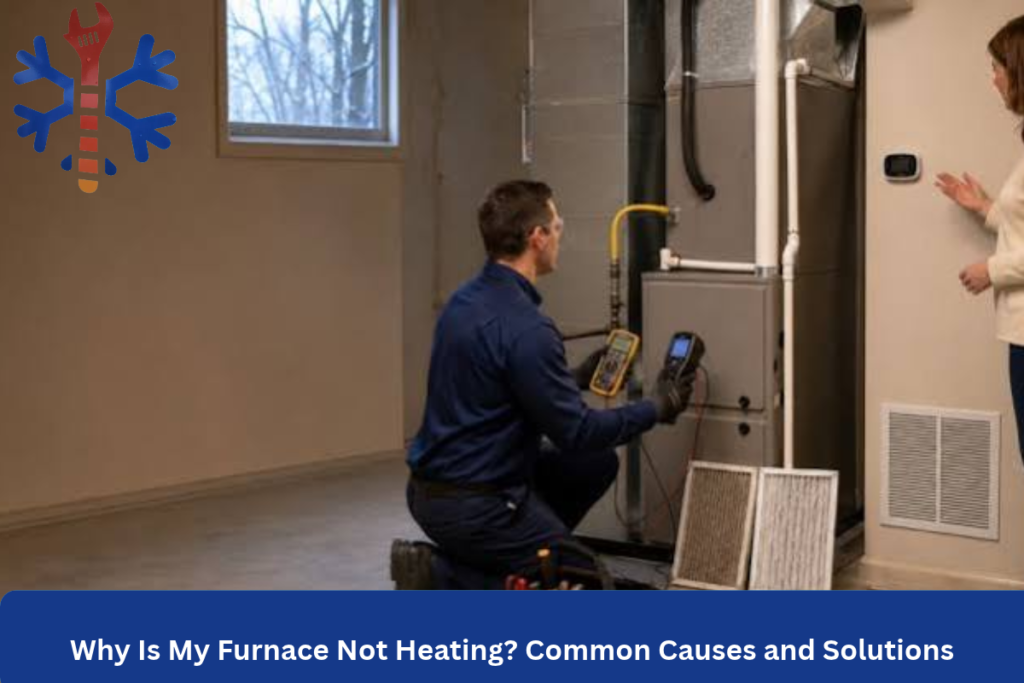
A furnace is essential for keeping your home comfortable during colder months. When it stops producing warm air or fails to heat your home properly, indoor temperatures can quickly become uncomfortable. You may notice that the furnace is running but blowing cold air, turning on and off frequently, or not starting at all.
There are several reasons why a furnace may stop heating. Some problems are simple, such as an incorrect thermostat setting or a dirty air filter. Others may involve ignition problems, electrical issues, blocked vents, or damaged furnace components that require professional attention.
Understanding the common causes can help you identify what might be wrong and decide when to contact an HVAC professional. In this guide, we will explain why your furnace is not heating, what you can check, and how to restore comfortable temperatures in your home.
Key Takeaways
- Check your thermostat settings before assuming the furnace is damaged.
- Dirty air filters can restrict airflow and affect heating performance.
- Ignition and pilot light problems may prevent the furnace from producing heat.
- Blocked vents and ductwork can stop warm air from reaching certain rooms.
- Frequent cycling may indicate airflow, thermostat, or mechanical problems.
- Professional furnace maintenance helps identify problems and improve system performance.
1. Check Your Thermostat Settings
Your thermostat controls when your furnace starts heating and how warm your home should be. Incorrect settings are one of the simplest reasons a furnace may not produce warm air.
Sometimes, the thermostat may accidentally be set to cooling mode, or the temperature setting may be lower than the current room temperature. Dead batteries or incorrect programming can also prevent the furnace from turning on.
How to Fix Thermostat Problems
Start by checking the following:
- Make sure the thermostat is set to HEAT rather than COOL.
- Set the desired temperature a few degrees above the current indoor temperature.
- Replace the batteries if your thermostat uses them.
- Check that the thermostat is switched on and displaying the correct settings.
- Make sure the thermostat is not affected by direct sunlight or nearby heat sources.
If the thermostat settings are correct but your furnace still does not respond, the problem may involve its wiring, sensors, or electrical connections. An HVAC technician can inspect these components and determine what needs attention.
2. A Dirty Air Filter Is Blocking Airflow
A clogged air filter is another common reason a furnace may stop heating properly. Air filters collect dust, dirt, pet hair, and other airborne particles. Over time, these materials can restrict airflow through the heating system.
When airflow becomes limited, the furnace may struggle to distribute warm air throughout your home. In some systems, restricted airflow can also cause the heat exchanger to overheat and trigger a safety shutdown.
How to Fix a Dirty Air Filter
Check your furnace filter regularly and replace it when it becomes dirty. Most standard filters need replacement every one to three months, although the recommended schedule depends on the filter type, household conditions, and manufacturer instructions.
If you have pets, allergies, or a dusty indoor environment, you may need to check the filter more frequently.
A clean filter allows air to move more freely, supports proper furnace operation, and helps maintain comfortable indoor temperatures.
3. Pilot Light or Ignition System Problems
Gas furnaces need a working ignition system to produce heat. Older models may use a standing pilot light, while newer systems commonly use electronic ignition.
If the pilot light goes out or the electronic ignition system stops working, the furnace may run its blower without producing warm air. In some cases, the furnace may not start at all.
How to Fix Ignition Problems
If your furnace uses a standing pilot light, check the manufacturer’s instructions to understand how it should operate. Do not attempt to relight it unless the manufacturer specifically provides a safe procedure.
Electronic ignition problems may involve faulty igniters, sensors, or electrical components. These parts require proper inspection and repair.
If you smell gas, leave the building without operating electrical switches or using anything that could create a spark. Contact your gas utility or emergency services from a safe location.
For ignition-related problems, professional furnace repair is the safest way to identify the issue and restore reliable heating.
4. Blocked or Leaking Air Ducts
Your furnace depends on ductwork to distribute heated air throughout your home. If ducts are blocked, damaged, or leaking, some rooms may receive very little warm air.
You might notice that the furnace is running normally, but certain areas remain cold. Dust buildup, closed vents, disconnected ducts, and damaged duct sections can all affect airflow.
How to Fix Ductwork Problems
Start by checking the supply and return air vents throughout your home.
- Make sure furniture and curtains are not blocking vents.
- Keep supply registers open unless your HVAC system instructions say otherwise.
- Check accessible ductwork for visible damage or disconnected sections.
- Look for signs of air escaping around duct joints.
If you suspect hidden leaks or significant duct damage, contact an HVAC professional. Proper duct inspection and repair can improve airflow and help your furnace distribute heat more evenly.
5. Furnace Is Short Cycling
Short cycling happens when a furnace turns on and off repeatedly without completing a normal heating cycle. Instead of running long enough to warm your home, the system shuts down shortly after starting.
This problem can make indoor temperatures uncomfortable and may place additional stress on furnace components.
Common causes include:
- Dirty or clogged air filters.
- Restricted airflow.
- Thermostat placement or calibration problems.
- Overheating caused by insufficient ventilation.
- Faulty limit switches or other mechanical components.
How to Fix Furnace Short Cycling
Begin by checking the air filter and making sure all necessary vents are clear. Also, confirm that your thermostat is installed in an appropriate location and is not receiving direct heat from appliances or sunlight.
If the furnace continues cycling frequently, arrange for a professional inspection. An HVAC technician can examine the limit switch, airflow, thermostat, and other components to identify the underlying cause.
6. Furnace Has Electrical or Power Supply Problems
Even gas furnaces rely on electricity to operate important components such as the blower motor, control board, and ignition system. If the electrical supply is interrupted, the furnace may stop working or fail to produce heat.
A tripped circuit breaker, faulty power switch, loose wiring, or damaged electrical component could be responsible.
How to Fix Electrical Problems
Check whether the furnace power switch is turned on and whether the circuit breaker has tripped. If the breaker has tripped, do not repeatedly reset it. Repeated tripping may indicate an electrical fault that requires professional attention.
Avoid opening electrical panels or attempting to repair internal furnace wiring yourself.
If the furnace has power but still does not operate correctly, contact a qualified HVAC technician to inspect its electrical components and controls.
7. The Furnace Flame Sensor Is Dirty
A flame sensor is an important safety component in many gas furnaces. It detects whether the burners have successfully ignited and confirms that a flame is present.
When the sensor becomes covered with dirt or carbon buildup, it may fail to detect the flame correctly. As a result, the furnace may ignite briefly and then shut off the burners as a safety measure.
How to Fix a Dirty Flame Sensor
A dirty flame sensor may need professional cleaning or replacement, depending on its condition.
If your furnace repeatedly starts and shuts down shortly afterward, a faulty flame sensor could be one possible cause. However, ignition problems and other safety controls can produce similar symptoms.
An HVAC technician can test the sensor, inspect the burner assembly, and determine whether cleaning or replacement is necessary.
When Should You Call a Professional for Furnace Repair?
Some furnace problems can be addressed through basic checks, such as replacing a dirty air filter or correcting thermostat settings. However, problems involving ignition systems, gas connections, electrical components, and internal mechanical parts should be handled by trained professionals.
Contact an HVAC technician if you notice:
- The furnace runs but continues blowing cold air.
- Your heating system repeatedly turns on and off.
- The furnace makes unusual banging, grinding, or rattling noises.
- The pilot light repeatedly goes out.
- Your circuit breaker trips whenever the furnace starts.
- Certain rooms remain cold despite the furnace running.
- The system stops working even after basic troubleshooting.
If you smell gas or your carbon monoxide alarm sounds, leave the property immediately and contact emergency services or the appropriate utility provider from a safe location.
Professional furnace inspections can help identify the actual cause of heating problems, prevent further damage, and restore reliable system operation.
How Regular Furnace Maintenance Prevents Heating Problems
Routine furnace maintenance is important for keeping your heating system in good working condition. Small problems can develop over time and eventually affect heating performance, energy consumption, and system reliability.
Scheduling regular maintenance allows HVAC professionals to inspect important components, check airflow, examine electrical connections, and identify signs of wear before they become major problems.
Here are a few maintenance practices that can help:
- Replace air filters according to the manufacturer’s recommendations.
- Keep supply and return vents clear.
- Schedule professional furnace inspections before the heating season.
- Pay attention to unusual sounds, smells, or changes in performance.
- Keep the area around your furnace clean and free of clutter.
- Have damaged or worn components inspected and repaired promptly.
Regular maintenance can help improve heating efficiency, support safer operation, and reduce the likelihood of unexpected breakdowns.
Final Thoughts on Why Your Furnace Is Not Heating
A furnace that stops producing warm air can make your home uncomfortable, especially during colder weather. Problems such as incorrect thermostat settings, dirty filters, ignition failures, blocked ductwork, and electrical issues can all affect heating performance.
Start with simple checks, including your thermostat, air filter, and vents. If the furnace continues to malfunction, avoid attempting complicated repairs yourself and contact an experienced HVAC professional.
For homeowners in Houston and surrounding Texas areas, IROB Tech HVAC LLC provides professional heating installation, repair, maintenance, and replacement services for furnaces, heat pumps, and boilers. With over eight years of HVAC experience, licensed technicians, and 24/7 availability, the company helps residential and commercial customers address heating and cooling problems.
If your furnace is not heating properly, contact IROB Tech HVAC LLC at (346) 971-1841 to request professional assistance and restore comfort to your home.
Frequently Asked Questions
1. Why is my furnace running but not producing heat?
A furnace may run without producing warm air because of a dirty air filter, ignition problem, thermostat issue, or faulty flame sensor. Restricted airflow or other mechanical problems may also prevent proper heating.
2. Why is my furnace blowing cold air instead of hot air?
Your furnace may blow cold air because the thermostat settings are incorrect, the burners are not igniting, or the system is experiencing an airflow problem. A professional inspection can help identify the exact cause.
3. How often should I replace my furnace air filter?
Most standard furnace filters should be replaced every one to three months. However, the replacement schedule depends on the filter type, household conditions, and manufacturer’s recommendations.
4. Why does my furnace keep turning on and off?
Frequent furnace cycling can result from dirty filters, restricted airflow, thermostat problems, overheating, or faulty safety components. If the issue continues, have your heating system inspected by an HVAC technician.
5. When should I call an HVAC technician for furnace problems?
Contact an HVAC professional if your furnace repeatedly shuts down, blows cold air, makes unusual noises, or fails to heat your home after basic troubleshooting. Gas and electrical problems should always be handled by qualified professionals.