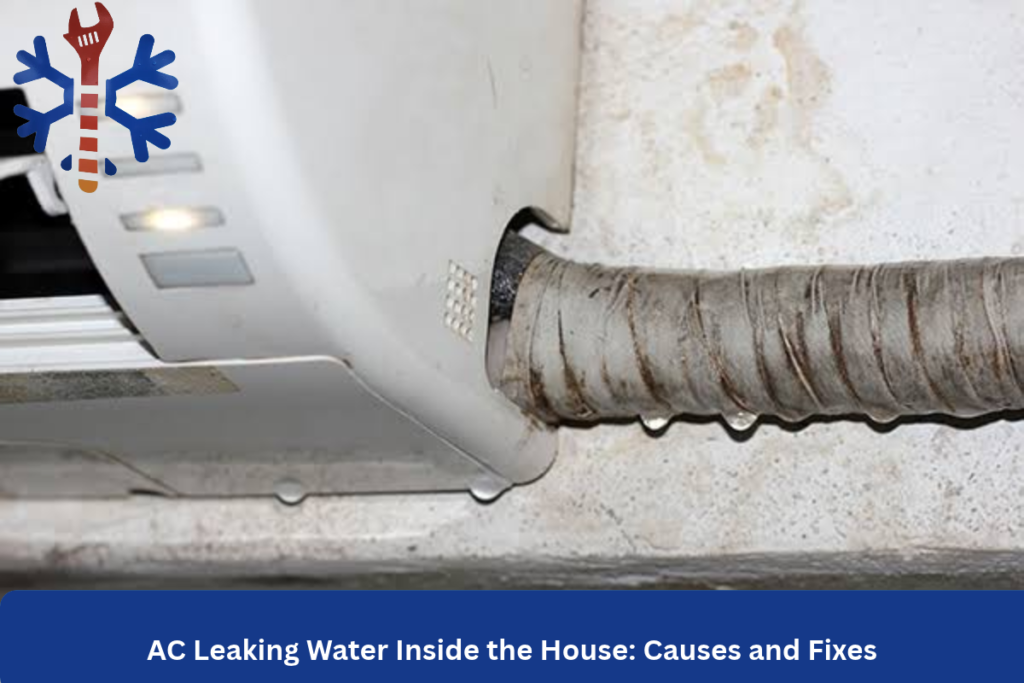
If you notice water dripping from your air conditioner or a wet patch near the indoor unit, don’t ignore it. An AC leaking water inside the house is a common problem, especially during Houston’s hot and humid summers. Even a small leak can damage your walls, ceilings, flooring, or furniture if you leave it untreated.
Your air conditioner naturally produces water while cooling your home. Normally, this water drains outside through a condensate drain line. When something stops the water from draining properly, it can leak into your house instead.
The good news is that many AC leaks can be fixed once you find the cause. Let’s look at the common reasons your air conditioner may be leaking water and what you can do about them.
1. A Clogged AC Drain Line
A clogged drain line is one of the most common reasons an air conditioner leaks water indoors. As your AC removes moisture from the air, the water collects in a drain pan and flows through a pipe to the outside.
Over time, dirt, algae, and other debris can build up inside the pipe. When the blockage prevents water from draining, the drain pan may fill up and overflow.
You might notice water around the indoor unit, a musty smell, or a water stain on the ceiling if your AC is installed in the attic.
What should you do?
Turn off the AC if water is leaking inside. Check the visible drain outlet for obvious blockages, but avoid pushing objects into the pipe or using harsh chemicals. If the line is clogged or the leak continues, call an HVAC technician to clear the blockage and check the drainage system.
Regular AC maintenance can help prevent this problem from coming back.
2. A Dirty Air Filter
Your AC filter collects dust, pet hair, and other particles from the air. If you don’t replace it when needed, it can become clogged and restrict airflow.
When enough air cannot pass over the evaporator coil, the coil may become too cold and freeze. Once the ice melts, the extra water can overflow the drain pan and leak into your home.
Other signs of a dirty filter include weak airflow, poor cooling, and an AC that runs longer than usual.
How to fix it
Check your air filter and replace it if it is dirty. Make sure you use the correct size and type recommended for your system.
If you see ice on the indoor unit or refrigerant lines, turn off the cooling system and allow the ice to melt naturally. Keep an eye on the surrounding area because more water may drain as it thaws.
If the coil freezes again, the problem may be more serious than a dirty filter. A technician can check for airflow problems, refrigerant issues, or a faulty blower.
3. A Frozen Evaporator Coil
A frozen evaporator coil can also cause water to leak inside your house. The coil becomes cold as part of the cooling process, but it should not develop a thick layer of ice.
A dirty filter, blocked vents, a faulty blower fan, or low refrigerant caused by a leak can lead to freezing.
When the ice melts, the water may be too much for the drain pan to handle, especially if the drainage system already has a problem.
What should you do?
Turn off the AC and let the ice melt on its own. Do not try to break the ice with a sharp object or continue running the system to force it to thaw.
If the coil freezes repeatedly, have an HVAC professional inspect the unit. The technician can find the cause and recommend the right repair instead of treating the leak as a separate problem.
4. A Damaged Drain Pan
The drain pan sits beneath the evaporator coil and collects the water produced during cooling. If the pan cracks, rusts, or becomes damaged, water can escape before it reaches the drain line.
This can happen in older air conditioners, but damage is possible in other systems too.
You may notice water underneath the unit even when the drain line appears clear. If the AC is installed in an attic, the leak may show up as a damp ceiling or a brown stain.
How to fix it
A damaged drain pan may need to be repaired or replaced, depending on its condition. An HVAC technician can inspect the pan and check whether the drain line is working properly.
Don’t rely on cleaning the drain line alone if the pan is leaking. The damaged part needs to be addressed to prevent more water from entering your home.
5. Low Refrigerant Levels
Refrigerant helps your air conditioner remove heat from indoor air. If the refrigerant level becomes too low because of a leak, the evaporator coil may get too cold and freeze.
When the ice melts, water can spill into the drain pan and leak around the indoor unit.
You may also notice that your AC isn’t cooling properly, takes longer to reach the set temperature, or runs almost constantly.
These signs do not always mean the refrigerant is low, so the system needs to be checked before deciding on a repair.
What should you do?
Call a qualified HVAC technician to inspect the system and check for refrigerant leaks. Simply adding more refrigerant without fixing a leak may only provide temporary relief.
Refrigerant work should be handled by a trained professional with the right equipment.
6. Incorrect AC Installation
Sometimes, an air conditioner leaks water because it was not installed correctly. The drain pipe may have the wrong slope, a connection may be loose, or the unit may not be positioned as required.
If your AC has leaked since installation or started leaking soon after a repair, the installation may need to be checked.
How to fix it
Ask an HVAC technician to inspect the drain line, connections, and unit placement. Correcting the installation may solve the problem and help water drain properly.
It’s better to find the actual cause than to keep cleaning up the water every time the AC runs.
7. High Humidity in Your Home
Houston’s humid weather means your air conditioner often has to remove a lot of moisture from the air. Producing condensation is normal, but the water should drain away without causing a leak.
If the drain line is partially blocked or the drain pan is damaged, the extra moisture can make the problem more noticeable.
Sometimes, the water may not be coming from the AC drain at all. Cold pipes or poorly insulated ductwork can collect condensation, which may drip onto nearby surfaces.
What should you do?
Check where the water appears to be coming from, without opening electrical compartments or taking apart the unit. An HVAC technician can determine whether the problem is related to the drain system, insulation, or another part of the equipment.
What to Do When Your AC Starts Leaking Water
If you find water around your air conditioner, take these steps to limit the damage:
- Turn off the AC. This helps prevent more water from collecting while you investigate the problem.
- Protect your belongings. Move furniture, electronics, and other items away from the leak. Use towels or a container to collect accessible water.
- Check the air filter. Replace it if it is dirty and follow the manufacturer’s recommendations.
- Look for ice. If the coil or refrigerant lines are frozen, leave the cooling system off and let the ice thaw naturally.
- Call for service if the leak continues. A blocked drain line, damaged pan, or refrigerant problem may need professional attention.
If water is near electrical wiring or equipment, don’t touch the wet area or attempt to inspect electrical components. Keep away and get professional help.
How to Prevent Your AC From Leaking Water
A little maintenance can help you avoid many common AC problems.
Replace the air filter regularly. Check it often during the summer and replace it when it becomes dirty. Homes with pets or a lot of dust may need more frequent filter changes.
Keep up with AC maintenance. A technician can check the drain line, drain pan, evaporator coil, and airflow to catch problems before they become bigger repairs.
Pay attention to unusual signs. Weak airflow, ice on the unit, musty smells, and water stains are all reasons to check your system.
Don’t ignore repeated leaks. If the same problem keeps happening, ask a technician to find out why instead of repeatedly clearing the water.
These simple steps can help keep your AC working properly during Houston’s long cooling season.
When Should You Call an AC Repair Professional?
You should call an HVAC technician if the drain line is blocked, the drain pan is damaged, the coil keeps freezing, or you cannot identify where the water is coming from.
Get help quickly if water is coming through the ceiling, damaging your walls, or collecting near electrical components. Turn off the system and stay away from any wet electrical area.
A technician can inspect the air conditioner, explain what’s causing the leak, and recommend a suitable repair. Fixing the source of the problem is the best way to prevent it from happening again.
AC Repair in Houston, TX
If your air conditioner is leaking water inside your home, IROB Tech HVAC LLC can help you find the cause and get the problem fixed. The company provides air conditioning repair, installation, maintenance, and heating services in Houston, TX, and surrounding service areas.
Whether the problem is a clogged drain line, a frozen coil, or another AC issue, getting it checked early can help prevent further damage to your home.
Final Thoughts
An AC leaking water inside the house is not something you should ignore. A clogged drain line, dirty filter, frozen coil, or damaged drain pan can all cause water to collect where it shouldn’t.
You may be able to solve a simple problem, such as a dirty filter, yourself. However, repeated leaks, frozen coils, and refrigerant problems need professional attention.
If you notice water around your AC, turn off the system, protect your home from further damage, and arrange an inspection if the cause isn’t clear. Taking care of the problem early can help you avoid more expensive repairs later.