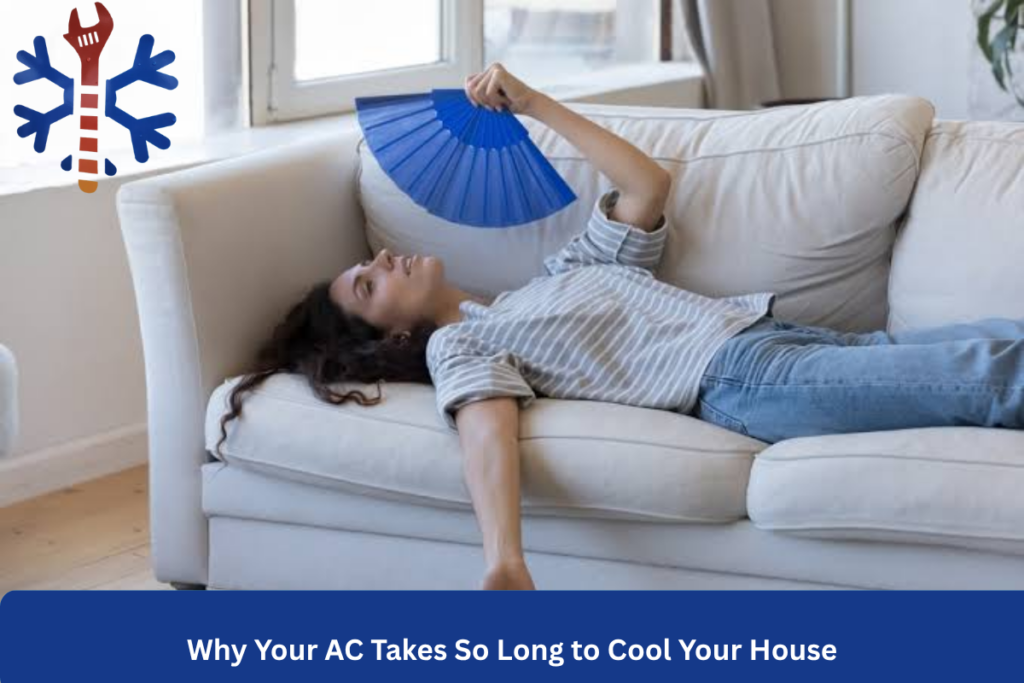
On a hot day, you expect your air conditioner to cool your home within a reasonable amount of time. But what happens when your AC runs for hours and your house still feels warm?
A cooling system that takes unusually long to reach the desired temperature can be frustrating. It can also lead to higher energy bills and unnecessary strain on your HVAC equipment. While some increase in cooling time is normal during extremely hot weather, consistently slow cooling may indicate an underlying problem.
Several factors can affect how quickly an air conditioner cools a home, including airflow, filters, ductwork, insulation, refrigerant, system size, outdoor temperature, and the condition of the equipment.
Understanding these potential causes can help homeowners determine when a simple adjustment may be enough and when professional HVAC service is needed.
1. Your Air Filter May Be Dirty
One of the first things to check when an AC is taking too long to cool your home is the air filter.
The filter captures dust and airborne particles before air moves through the HVAC system. As the filter becomes loaded with debris, airflow can become restricted.
Reduced airflow means less conditioned air may circulate throughout your home. Your AC may then need to operate for longer periods to reach the thermostat setting.
Check your filter regularly and replace it according to the manufacturer’s recommendations. Homes with pets, dust, or other factors that increase airborne particles may require more frequent filter changes.
2. Your Outdoor Unit May Be Dirty
Your outdoor condenser unit is responsible for releasing heat removed from your home.
If dirt, leaves, grass clippings, or other debris accumulate around the unit, airflow can be restricted. Dirty condenser coils can also reduce the system’s ability to transfer heat efficiently.
Make sure the area around the outdoor unit remains clear. However, avoid opening electrical panels or attempting complicated cleaning yourself.
If the outdoor unit appears heavily dirty or the AC is not cooling properly, professional maintenance may be appropriate.
3. Low Refrigerant Can Slow Cooling
Refrigerant is essential to the cooling process. It allows your AC system to absorb heat from indoor air and transfer that heat outside.
If the system has a refrigerant leak or an incorrect refrigerant charge, its cooling performance can decline.
Possible signs include:
- The AC runs for long periods
- Air from vents is not as cold as expected
- Ice appears on the indoor coil or refrigerant lines
- Cooling performance gradually decreases
- Energy consumption increases
Refrigerant problems require professional attention. A technician should identify the cause of the low charge and address the issue appropriately.
4. Your Ductwork May Have Leaks
Your AC can produce cold air without effectively cooling your home if that air is being lost through the ductwork.
Ducts transport conditioned air from the HVAC equipment to different rooms. Cracks, gaps, disconnected sections, and poor seals can allow cooled air to escape.
This can be especially problematic when ducts run through hot attics or other unconditioned areas.
If some rooms cool normally while others remain warm, ductwork could be one possible explanation.
A professional HVAC technician can inspect accessible ductwork and evaluate whether leakage or airflow restrictions are affecting system performance.
5. Your Home May Have Poor Insulation
Your air conditioner does not work in isolation. The condition of your home’s insulation can have a major impact on cooling.
Poor insulation allows heat to enter the home more easily. This is particularly important in attics and exterior walls, where heat transfer can be significant during hot weather.
If your AC runs continuously but your home still struggles to maintain a comfortable temperature, insulation may be one factor worth evaluating.
Improving insulation can help your home retain conditioned air and reduce the amount of heat entering from outside.
6. Air Leaks Around Doors and Windows
Small gaps around doors, windows, and other openings can allow outdoor heat to enter your home.
At the same time, conditioned indoor air can escape through these openings.
This creates additional work for your AC system.
Check for noticeable drafts, damaged weatherstripping, gaps around window frames, or doors that do not seal properly.
Addressing these areas can help reduce unwanted heat transfer and make it easier for your HVAC system to maintain indoor temperatures.
7. Your AC May Be Undersized
An air conditioner needs to be properly sized for the home.
If the system is too small for the home’s cooling requirements, it may struggle to keep up during hot weather.
An undersized system may run for extended periods but still fail to reach the thermostat setting.
Several factors influence the appropriate AC size, including:
- Home size
- Insulation
- Window area
- Ceiling height
- Local climate
- Sun exposure
- Number of occupants
- Home construction
If your AC has always struggled to cool your home, professional evaluation can determine whether system sizing is contributing to the problem.
8. An Oversized AC Can Also Cause Problems
It might seem logical that a larger air conditioner would cool your home faster. However, an oversized system can create its own problems.
An oversized AC may cool the air quickly but cycle off before adequately removing humidity from the home.
This can leave the house feeling uncomfortable even when the thermostat reaches the desired temperature.
Proper HVAC sizing is therefore about finding the right capacity rather than simply choosing the largest available system.
9. Your Thermostat May Be in a Poor Location
Thermostat placement can influence how your HVAC system responds to indoor temperatures.
If the thermostat is exposed to direct sunlight, located near a heat-producing appliance, or positioned close to an exterior door, it may detect a temperature that does not accurately represent the rest of the home.
This can cause the AC to run longer or shut off earlier than expected.
A thermostat should generally be located in an area with stable temperatures and good air circulation.
10. Blocked Air Vents Can Restrict Cooling
Closed or blocked supply vents can interfere with air distribution.
Furniture, curtains, rugs, or other objects may accidentally cover vents and reduce airflow into a room.
Walk through your home and make sure supply vents are open and unobstructed.
If one or more rooms still receive weak airflow after removing obvious obstructions, there may be a deeper ductwork or HVAC problem.
11. Dirty Evaporator Coils
The evaporator coil absorbs heat from indoor air.
If the coil becomes dirty, its ability to transfer heat can be reduced. This can affect cooling performance and cause the AC to run longer.
Coil cleaning should generally be handled carefully because HVAC components can be damaged if cleaned improperly.
Regular professional maintenance can help identify buildup and other conditions affecting system performance.
12. Extreme Outdoor Temperatures
Sometimes your AC is simply dealing with unusually demanding conditions.
During periods of extreme heat, your home may gain heat faster than it does on a mild summer day. Your AC may therefore run for longer periods while attempting to maintain the selected indoor temperature.
Longer runtime does not automatically mean your system is malfunctioning.
However, if the system suddenly takes much longer to cool than it normally does under similar weather conditions, it is worth investigating.
13. Your AC May Need Professional Maintenance
Regular HVAC maintenance can help keep your system operating efficiently.
During a professional service visit, a technician can inspect key components, evaluate airflow, check electrical connections, examine the outdoor unit, and identify potential problems.
Maintenance can also help identify small issues before they develop into larger repairs.
If your AC has not been serviced recently and is taking longer than usual to cool the house, scheduling an inspection may be worthwhile.
What Homeowners Can Check First
Before calling for service, there are several simple things you can check.
Check the thermostat
Make sure the system is set to cooling mode and the temperature setting is appropriate.
Inspect the air filter
Replace a dirty or heavily loaded filter according to the manufacturer’s recommendations.
Check vents
Make sure supply vents are open and not blocked by furniture or other objects.
Look at the outdoor unit
Keep leaves, grass, and other debris away from the condenser.
Check doors and windows
Look for obvious gaps or damaged weatherstripping that could allow hot air inside.
If these basic steps do not improve cooling, professional diagnosis may be necessary.
When to Call an HVAC Professional
Contact an HVAC professional if:
- Your AC runs constantly without adequately cooling the home
- The system suddenly takes much longer to cool than usual
- Airflow from vents is weak
- You notice ice on the system
- You suspect a refrigerant problem
- The outdoor unit is not operating properly
- Energy bills have increased unexpectedly
- Some rooms remain significantly warmer than others
- The system frequently shuts down or restarts
A trained technician can determine whether the problem involves the equipment, ductwork, airflow, refrigerant, thermostat, insulation, or another part of the home.
Final Thought
An AC that takes too long to cool your house can be caused by something as simple as a dirty filter or blocked vent, but it may also indicate more significant problems involving ductwork, refrigerant, coils, system sizing, or the HVAC equipment itself.
Before assuming that you need a new air conditioner, start with basic checks such as the thermostat, air filter, vents, and outdoor unit. If the problem continues, professional HVAC service can help identify the actual cause.
Your AC should be able to provide reliable cooling appropriate for your home’s design and the conditions outside. Keeping the system maintained, addressing airflow issues, and improving areas that allow unwanted heat into the home can all contribute to better comfort and more efficient operation.
When your AC suddenly starts taking much longer to cool your home, don’t ignore the change. Identifying the problem early can help prevent unnecessary strain and potentially more expensive repairs later.
FAQs
1. Why does my AC take so long to cool my house?
Common causes include a dirty filter, restricted airflow, dirty coils, duct leaks, low refrigerant, poor insulation, thermostat issues, extreme outdoor temperatures, or an improperly sized system.
2. Is it normal for an AC to run constantly on a very hot day?
An AC may run for extended periods during extreme heat because the home is gaining heat quickly. However, if it cannot maintain a comfortable temperature or behaves differently than usual, it should be evaluated.
3. Can a dirty air filter make my AC run longer?
Yes. A heavily loaded filter can restrict airflow and reduce cooling performance, potentially causing the system to operate for longer periods.
4. Can ductwork affect how quickly my house cools?
Yes. Leaking, damaged, disconnected, or poorly insulated ductwork can reduce the amount of conditioned air reaching your living spaces.
5. Why is my AC cooling some rooms faster than others?
Uneven cooling can be caused by ductwork problems, airflow restrictions, insulation differences, window exposure, thermostat placement, or HVAC sizing.
6. Can low refrigerant cause slow cooling?
Yes. A low refrigerant charge can reduce the system’s ability to transfer heat and may cause the AC to run for longer periods.