Have you noticed that one room in your home always feels warmer or colder than the others? Are your utility bills climbing even though your HVAC system seems to be running normally? These issues may not be caused by your heating or cooling equipment alone. In many cases, the real problem lies inside your ductwork.
Your home’s air ducts play a crucial role in delivering heated and cooled air throughout every room. However, over time, ductwork can develop cracks, loose connections, corrosion, or wear that reduces your system’s performance. Unfortunately, these problems often go unnoticed because most ductwork is hidden behind walls, ceilings, or attics. As a result, homeowners continue paying for wasted energy while experiencing poor comfort and declining indoor air quality.
The good news is that recognizing the warning signs early can help you avoid expensive repairs, improve your home’s comfort, and increase your HVAC system’s lifespan. Whether you’re dealing with strange noises, uneven airflow, or high energy bills, understanding when you need air duct repair can save you both time and money. In this guide, we’ll explain the most common signs of damaged air ducts, why timely repairs matter, and how professional HVAC ductwork repair can restore your home’s efficiency.
Why Healthy Air Ducts Matter More Than You Think
Many homeowners focus on their furnace or air conditioner when something goes wrong, but they often overlook the ductwork that carries conditioned air throughout the house. Think of your air ducts as the highways of your HVAC system. Even the most efficient heating and cooling equipment cannot perform properly if the ducts are damaged.
When your ductwork is in excellent condition, every room receives consistent airflow, temperatures remain balanced, and your HVAC equipment doesn’t have to work harder than necessary. This leads to better comfort, lower operating costs, and improved HVAC efficiency throughout every season.
On the other hand, leaky air ducts allow conditioned air to escape into attics, crawl spaces, basements, and inside walls. Instead of cooling or heating your living spaces, your system wastes energy where it isn’t needed. Over time, these air duct leaks force your HVAC system to run longer cycles, increasing wear and tear while raising your monthly utility bills.
1. Uneven Temperatures Throughout Your Home
One of the earliest signs that your home needs air duct repair is inconsistent temperatures between rooms. Maybe your upstairs bedrooms stay hot during summer while your downstairs remains comfortable. Or perhaps one room always feels colder than the rest during winter.
Although thermostat settings or insulation can sometimes contribute to this issue, damaged ductwork is often the hidden culprit. Cracks, disconnected ducts, or crushed duct sections prevent conditioned air from reaching certain areas efficiently.
Professional HVAC ductwork repair restores balanced airflow by sealing leaks, reconnecting loose joints, and replacing damaged duct sections. Once repairs are completed, homeowners often notice more consistent indoor temperatures and greater overall comfort.
2. Rising Energy Bills Without Explanation
Have your monthly utility bills steadily increased even though your energy habits haven’t changed? If so, your ductwork deserves a closer look.
When air duct leaks develop, your HVAC system loses a significant amount of conditioned air before it reaches your living spaces. Consequently, your furnace or air conditioner must run much longer to maintain your desired temperature. This extra workload directly contributes to high energy bills.
Instead of assuming your HVAC equipment needs replacement, schedule a professional duct inspection first. In many cases, repairing damaged ductwork costs far less than replacing major HVAC components while delivering immediate improvements in energy efficiency.
3. Weak or Uneven Airflow from Vents
Do certain vents barely produce any airflow while others seem perfectly normal? Weak airflow is another clear warning sign of damaged air ducts.
Collapsed duct sections, disconnected joints, accumulated debris, or poorly sealed connections can all restrict airflow throughout your home. Even small leaks reduce the amount of conditioned air reaching each room.
If you notice uneven airflow, don’t ignore the problem. Early air duct repair restores proper air circulation and prevents your HVAC system from overworking. Additionally, balanced airflow helps maintain consistent comfort in every room while reducing unnecessary energy consumption.
4. Excessive Dust Around Your Home
If you’re constantly dusting furniture only to find dust returning within days, your ductwork may be allowing contaminants to enter your HVAC system.
Cracks and openings in damaged ducts can pull dust, insulation fibers, dirt, and other airborne particles from attics, crawl spaces, or wall cavities. These pollutants circulate throughout your home every time your heating or cooling system operates.
Besides creating more household cleaning, contaminated ductwork negatively affects indoor air quality. Family members with allergies, asthma, or respiratory sensitivities may notice worsening symptoms due to poor air circulation. Professional duct repairs help eliminate unwanted contaminants while supporting cleaner, healthier indoor air.
5. Strange Noises Coming From Your Ductwork
Your HVAC system should operate relatively quietly. While it’s normal to hear a slight hum when the system starts, loud rattling, whistling, banging, or popping sounds often indicate a ductwork problem.
These noises usually occur because leaky air ducts, loose duct connections, expanding metal ducts, or damaged sections allow air to escape or create pressure changes. As your HVAC system works harder to compensate for the lost airflow, the sounds may become more frequent and noticeable.
Ignoring these warning signs can lead to larger problems over time. A professional inspection can identify the source of the noise and determine whether HVAC ductwork repair is needed. Addressing the issue early helps restore quiet operation while improving overall system performance.
6. Poor Indoor Air Quality and Unpleasant Odors
If your home constantly feels dusty, smells musty, or has lingering odors whenever your HVAC system runs, your ductwork could be the source of the problem.
Damaged air ducts allow dust, insulation particles, moisture, and even mold spores to enter the airflow. As a result, these contaminants circulate throughout your home instead of staying trapped outside the conditioned living space. This can significantly reduce indoor air quality, making your home less comfortable and potentially affecting family members with allergies or respiratory conditions.
Professional air duct repair seals damaged areas and prevents unwanted contaminants from entering your ventilation system. Combined with routine filter changes and periodic HVAC maintenance, repaired ductwork helps create a cleaner, healthier home environment.
7. Your HVAC System Runs Longer Than Usual
An HVAC system that rarely shuts off is often trying to compensate for lost airflow. If conditioned air escapes through air duct leaks, your furnace or air conditioner must run longer to reach the desired temperature.
Longer operating cycles increase energy consumption and place unnecessary strain on your equipment. Eventually, this extra workload may shorten the lifespan of important components such as the blower motor, compressor, or heat exchanger.
Scheduling professional HVAC ductwork repair restores proper airflow, allowing your heating and cooling system to operate more efficiently. This not only improves HVAC efficiency but also helps reduce repair costs and extend the life of your entire system.
8. Why Professional Air Duct Repair Is Worth the Investment
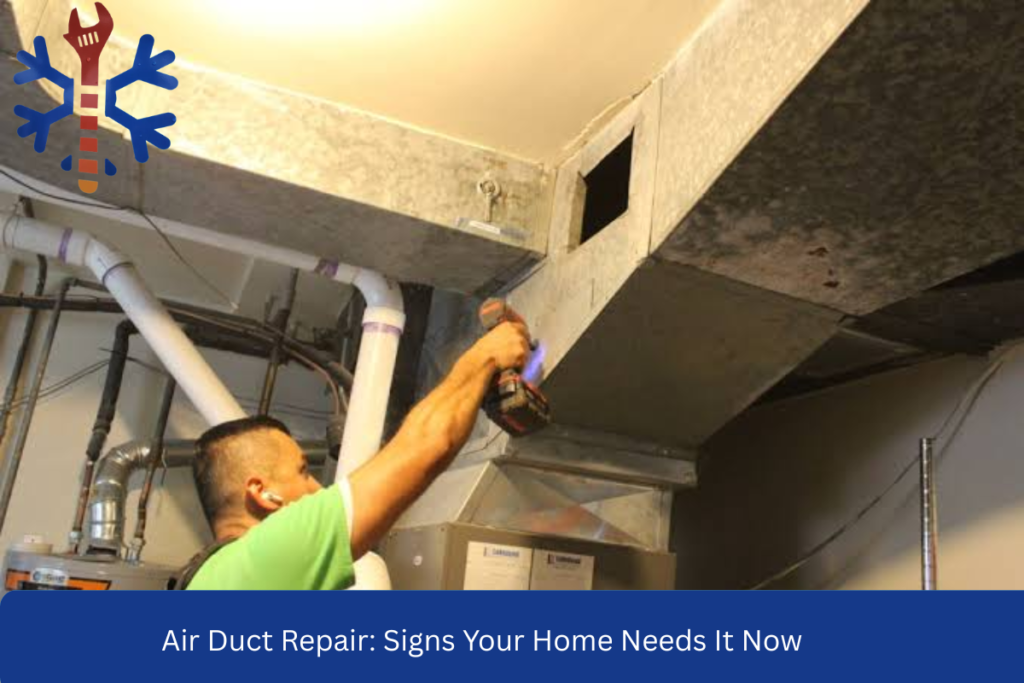
While some homeowners may consider sealing visible duct joints themselves, most ductwork is hidden behind walls, ceilings, crawl spaces, or attics. Finding every leak requires specialized equipment and professional expertise.
Experienced HVAC technicians perform a complete inspection to locate hidden air duct leaks, disconnected sections, crushed ducts, or deteriorated insulation. They then recommend the most effective repair solutions based on your home’s specific needs.
Professional repairs provide several long-term benefits:
- Improved HVAC efficiency
- Lower high energy bills
- Better indoor air quality
- More consistent temperatures
- Reduced uneven airflow
- Longer HVAC equipment lifespan
- Greater year-round comfort
When paired with routine HVAC maintenance, properly repaired ductwork keeps your heating and cooling system operating at peak performance for years to come.
How to Prevent Future Air Duct Problems
Although normal wear and aging are unavoidable, you can minimize future ductwork issues through regular care and preventative maintenance.
Schedule professional duct inspections every few years, especially if your home is older or you’ve recently completed remodeling work. Replace HVAC filters on schedule to reduce dust buildup and maintain healthy airflow throughout the system.
You should also watch for early warning signs such as unusual noises, inconsistent room temperatures, excessive dust, or unexpectedly high energy bills. Addressing these problems promptly prevents minor issues from becoming major repairs.
Finally, invest in annual HVAC maintenance. Regular inspections allow technicians to identify developing duct problems before they significantly impact your comfort or energy costs.
Frequently Asked Questions
How do I know if I need air duct repair?
Common signs include uneven airflow, rising utility bills, excessive dust, strange noises, poor indoor air quality, and rooms that never reach the desired temperature.
Can damaged air ducts increase my energy bills?
Yes. Leaky air ducts allow conditioned air to escape before reaching your living spaces, forcing your HVAC system to work harder and resulting in high energy bills.
Is air duct repair better than replacing the entire duct system?
In many situations, yes. If only certain sections are damaged, professional air duct repair is often more affordable than complete replacement. A qualified technician can determine the best option after an inspection.
How often should air ducts be inspected?
Most HVAC professionals recommend inspecting ductwork every 3–5 years or sooner if you notice airflow issues, unusual noises, or declining system performance.
Does air duct repair improve indoor air quality?
Absolutely. Repairing damaged ducts helps keep dust, allergens, insulation particles, and other contaminants from entering your HVAC system, leading to cleaner indoor air.
Final Thoughts
Your home’s ductwork plays a much bigger role than many homeowners realize. Even a high-quality heating and cooling system cannot perform efficiently if conditioned air escapes through damaged or leaking ducts. By recognizing the warning signs early—including uneven airflow, high energy bills, strange noises, excessive dust, and declining indoor air quality—you can take action before small problems become expensive repairs.
Professional air duct repair not only restores comfort but also improves HVAC efficiency, protects your equipment from unnecessary wear, and creates a healthier indoor environment for your family. Combined with routine HVAC maintenance, well-maintained ductwork helps your heating and cooling system deliver reliable performance year after year.
If you’ve noticed any of these warning signs in your home, don’t wait until the problem gets worse. Schedule a professional duct inspection today and enjoy cleaner air, lower energy costs, and consistent comfort in every room.