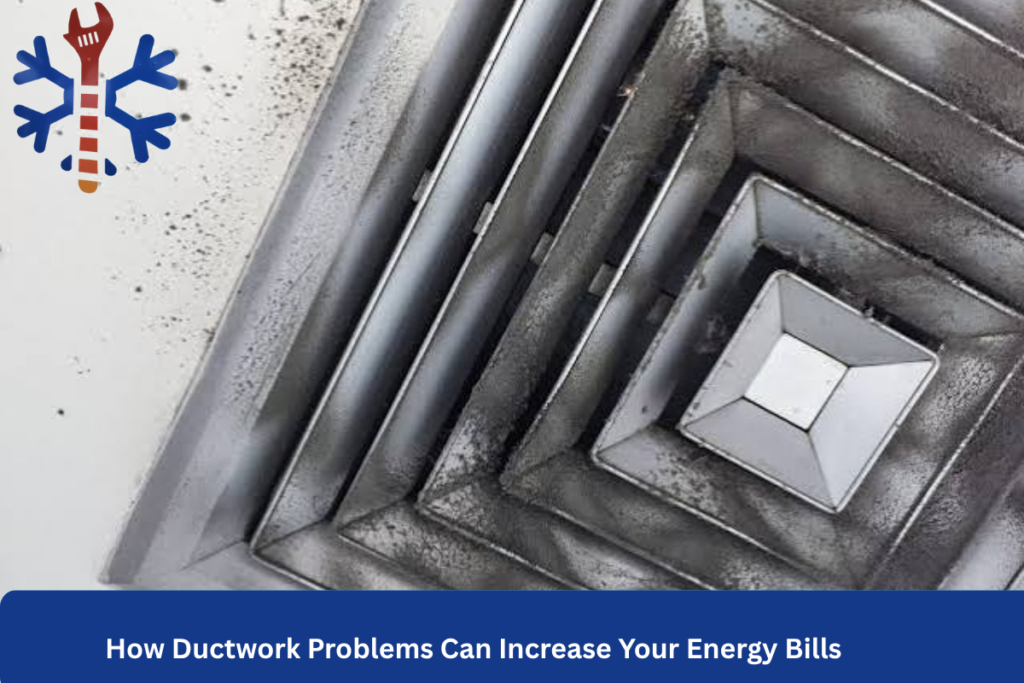
When homeowners think about rising energy bills, they often blame an aging air conditioner, an inefficient furnace, or a thermostat that is set too high or too low. While these can certainly affect energy consumption, there is another important part of the HVAC system that is often overlooked: the ductwork.
Your ductwork is responsible for moving conditioned air throughout your home. When ducts are properly designed, sealed, insulated, and maintained, they help your HVAC system deliver comfortable air efficiently. However, damaged, poorly connected, or improperly insulated ducts can cause conditioned air to escape before it reaches your living spaces.
As a result, your HVAC system may have to work harder and run longer to maintain the temperature you selected. Over time, this can contribute to higher energy consumption and less consistent comfort.
Understanding how ductwork problems affect HVAC efficiency can help homeowners recognize potential issues and determine when professional inspection or repair may be necessary.
What Is HVAC Ductwork?
Ductwork is the network of passages that carries heated or cooled air from your HVAC equipment to different rooms throughout your home.
Depending on the home’s design, duct systems may run through attics, crawl spaces, basements, walls, ceilings, or other areas.
A typical forced-air HVAC system uses supply ducts to deliver conditioned air and return ducts to carry air back toward the HVAC equipment. For the system to operate efficiently, these components need to work together properly.
If there are leaks, blockages, poor insulation, or design problems, the HVAC system may struggle to distribute conditioned air effectively.
How Duct Leaks Waste Energy
One of the most common ductwork problems is air leakage.
Ducts can develop gaps or cracks around joints, seams, connections, and other areas. Over time, materials can also deteriorate or become disconnected.
When conditioned air escapes through these openings, less cooled or heated air reaches the rooms where it is needed.
For example, during a hot summer day, your air conditioner may cool the air successfully, but some of that cooled air could escape into an attic or crawl space through leaking ducts. The rooms remain warmer than expected, causing the system to continue running.
This creates a cycle where the HVAC system works harder without delivering the expected level of comfort.
Poorly Insulated Ducts Can Affect Efficiency
Duct insulation is particularly important when ducts pass through unconditioned areas such as attics, garages, crawl spaces, or other spaces exposed to extreme temperatures.
During summer, hot surrounding air can increase the temperature of cooled air traveling through poorly insulated ducts. During winter, heat can be lost as warm air moves through cold areas.
This means your HVAC equipment may need to operate longer to compensate for temperature losses.
Proper insulation helps reduce heat transfer between the ductwork and surrounding environment, allowing conditioned air to retain more of its intended temperature as it travels through the home.
Blocked or Restricted Ducts Can Make Your HVAC Work Harder
Ductwork problems are not limited to leaks.
Blocked or restricted ducts can also interfere with airflow. Furniture, debris, damaged duct sections, closed vents, or other obstructions can limit the amount of air moving through the system.
When airflow is restricted, certain rooms may receive less conditioned air than others.
You might notice that one bedroom feels warmer than the rest of the house or that some rooms take longer to reach the desired temperature.
Your HVAC system may continue running because the thermostat has not detected the desired temperature, increasing operating time and potentially increasing energy use.
Poor Duct Design Can Create Uneven Temperatures
Even when ducts do not have visible damage, poor design can contribute to inefficient HVAC performance.
Ducts need to be appropriately sized and configured for the home and HVAC equipment. If certain sections are too small, too long, poorly positioned, or improperly balanced, airflow may not be distributed evenly.
This can result in hot and cold spots throughout the home.
Homeowners sometimes respond by lowering or raising the thermostat to compensate. Unfortunately, changing the thermostat does not necessarily solve the underlying airflow problem.
A professional HVAC technician can evaluate airflow and determine whether ductwork design or distribution is contributing to comfort problems.
Disconnected Ducts Can Waste Conditioned Air
Duct sections can sometimes become loose or disconnected.
A disconnected duct can release a significant amount of conditioned air into an attic, crawl space, basement, or wall cavity instead of delivering it to the intended room.
Signs of a possible disconnected duct may include:
- A room that remains unusually warm or cold
- Weak airflow from a vent
- Unusual noises when the HVAC system runs
- Higher-than-expected energy bills
- Visible gaps around duct connections
- Air escaping from areas around the ductwork
If you suspect a duct has become disconnected, professional inspection is recommended rather than attempting complicated repairs without proper knowledge.
Leaky Return Ducts Can Also Cause Problems
Return ducts are just as important as supply ducts.
The return side of an HVAC system pulls air back toward the equipment so it can be conditioned and redistributed.
Leaks in return ductwork can interfere with the system’s ability to circulate air properly. Depending on where the leak occurs, the system may also draw air from unwanted spaces.
A properly functioning return system is important for maintaining balanced airflow and consistent indoor comfort.
Why Duct Problems Can Lead to Higher Energy Bills
The connection between ductwork and energy costs is relatively simple.
When ducts work properly:
HVAC equipment → conditioned air → ductwork → rooms
When ductwork has leaks, restrictions, or insulation problems:
HVAC equipment → conditioned air → energy loss → longer system operation
If conditioned air is lost or airflow is restricted, your HVAC equipment may need to operate longer to reach the thermostat’s target temperature.
Longer operating cycles can mean increased energy consumption.
The exact impact varies depending on the home’s duct system, climate, HVAC equipment, insulation, duct location, and severity of the problem.
Signs Your Ductwork May Be Affecting Your Energy Bills
Knowing what to look for can help homeowners identify potential duct problems.
1. Unexplained Increase in Energy Costs
If your energy bills have increased without a major change in your HVAC usage, ductwork may be one factor worth investigating.
2. Uneven Temperatures
Rooms that consistently feel warmer or colder than others can indicate airflow or duct distribution problems.
3. Weak Airflow
If air coming from certain vents feels significantly weaker than expected, there may be a restriction, leak, or disconnected section.
4. Excessive Dust
Damaged or poorly sealed ductwork can contribute to unwanted air and dust entering the system, depending on the location and type of duct problem.
5. HVAC Runs for Long Periods
An HVAC system that frequently runs for extended periods may be struggling with airflow, duct losses, insulation issues, or another system problem.
6. Visible Duct Damage
Crushed, disconnected, deteriorated, or poorly sealed duct sections are clear reasons to schedule an inspection.
How Professional Ductwork Inspection Can Help
Because much of a home’s ductwork may be hidden behind walls, ceilings, or other structures, identifying problems is not always straightforward.
An HVAC professional can inspect accessible duct sections and evaluate airflow throughout the system.
Depending on the situation, they may look for:
- Air leaks
- Loose connections
- Damaged ducts
- Poor insulation
- Airflow restrictions
- Improper sizing
- Return-air problems
- Unbalanced distribution
Once the problem is identified, the appropriate solution may involve sealing connections, repairing damaged sections, improving insulation, correcting airflow restrictions, or making other system adjustments.
Why Duct Maintenance Matters
Ductwork does not always require frequent repairs, but it should not be ignored.
Regular HVAC maintenance provides an opportunity to identify potential duct problems before they become more serious. Homeowners should also pay attention to changes in comfort, airflow, system runtime, and energy consumption.
Keeping vents and registers unobstructed is another simple step homeowners can take. Furniture, curtains, rugs, and other objects should not block air from moving freely through the room.
Improving HVAC Efficiency Starts With the Whole System
Your HVAC system is more than just the air conditioner, furnace, or heat pump.
Efficient performance depends on multiple components working together, including the equipment, thermostat, filters, ductwork, insulation, and airflow.
Replacing an HVAC system may not solve every efficiency problem if the existing ductwork is leaking or poorly designed.
That is why homeowners experiencing high energy bills or uneven comfort should consider having the entire system evaluated rather than automatically assuming the HVAC equipment itself is the problem.
Final Thought
Ductwork plays an essential role in delivering conditioned air throughout your home. When ducts are leaking, poorly insulated, restricted, disconnected, or incorrectly designed, your HVAC system may have to work harder and run longer to maintain comfortable temperatures.
Higher energy bills, uneven room temperatures, weak airflow, and extended HVAC runtime can all be signs that your ductwork deserves attention.
If you suspect your ducts are affecting your home’s comfort or energy efficiency, a professional HVAC inspection can help identify the underlying problem. Addressing ductwork issues can support better airflow, more consistent comfort, and more efficient HVAC operation.
Instead of focusing only on the equipment itself, remember to look at the complete HVAC system. Healthy, properly functioning ductwork can be an important part of keeping your home comfortable and your energy use under control.
FAQs
1. Can damaged ductwork increase energy bills?
Yes. Leaking, poorly insulated, disconnected, or restricted ducts can reduce the amount of conditioned air reaching your rooms, potentially causing the HVAC system to operate longer and use more energy.
2. What are the signs of leaking ductwork?
Common signs can include uneven temperatures, weak airflow, unexplained increases in energy bills, excessive HVAC runtime, and visible gaps or damage around accessible duct sections.
3. Can duct insulation improve HVAC efficiency?
Proper duct insulation can help reduce heat transfer when ductwork passes through unconditioned spaces, helping conditioned air maintain a more consistent temperature as it travels through the system.
4. Why is one room hotter or colder than the rest of the house?
Uneven temperatures can have several causes, including duct leaks, restricted airflow, poor duct design, insulation problems, window exposure, or HVAC system issues. A professional inspection can help determine the cause.
5. How often should ductwork be inspected?
There is no single schedule that applies to every home. Ductwork should be inspected when homeowners notice airflow problems, unusual energy costs, visible damage, or inconsistent temperatures. It can also be evaluated during routine HVAC service.
6. Can sealing ducts lower energy costs?
Sealing significant duct leaks can reduce conditioned-air loss and may help improve HVAC efficiency. The potential savings depend on the size and location of the leaks and the overall condition of the system.
7. Should I replace my HVAC system if my energy bills are high?
Not necessarily. High energy bills can result from several issues, including ductwork problems, poor insulation, thermostat settings, airflow restrictions, or aging equipment. A professional HVAC evaluation can help identify the actual cause before you invest in a replacement.