A mini split system is designed to keep your home comfortable throughout the year, but when it stops producing warm air during colder weather, it can quickly become frustrating. You might notice the unit blowing cool air, taking too long to heat a room, or shutting down unexpectedly. While some heating problems can be resolved with a few basic checks, others may indicate an issue that requires professional attention.
Understanding why your mini split is not heating can help you determine whether a simple adjustment is enough or whether you need a professional HVAC technician. In this guide, we will discuss common heating problems, practical troubleshooting steps, warning signs to watch for, and ways to keep your mini split working efficiently during winter.
Common Reasons a Mini Split Stops Heating
Mini split systems use heat pump technology to transfer heat from the outdoor air into your home. When a component stops working correctly, the system may struggle to produce enough warmth or stop heating altogether.
Here are some common reasons your mini split may not be heating properly.
1. Dirty or Clogged Air Filters
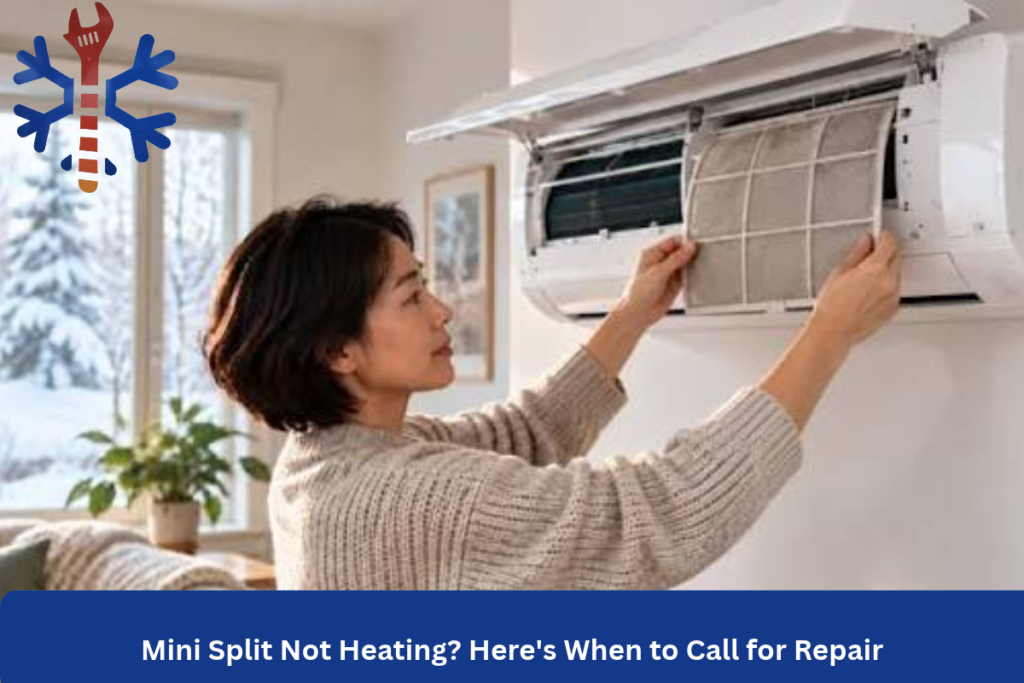
Air filters collect dust, dirt, and other airborne particles over time. When they become clogged, airflow through the indoor unit decreases, making it harder for the system to distribute warm air throughout the room.
Restricted airflow can also affect overall system performance and put additional strain on internal components. Cleaning or replacing the filters regularly is one of the easiest ways to maintain proper heating performance.
2. Incorrect Thermostat Settings
Sometimes, a mini split that is not heating has a simple settings issue. If the remote or thermostat is accidentally set to cooling or fan mode, the system will not provide the warmth you expect.
Check that the unit is set to heating mode and that the desired temperature is higher than the current room temperature. Also, replace weak remote batteries if the system does not respond to your adjustments.
3. Refrigerant Leaks
Refrigerant plays an important role in transferring heat between the indoor and outdoor units. If the system develops a refrigerant leak, its ability to produce warm air can decrease significantly.
You may notice weak heating, longer operating cycles, unusual hissing sounds, or ice forming on refrigerant lines. Low refrigerant levels can also place additional stress on the compressor.
Because refrigerant handling requires specialized equipment and proper certification, this problem should always be addressed by a qualified HVAC technician.
4. Frozen Outdoor Unit
During colder weather, some frost may naturally develop on the outdoor unit. Mini split heat pumps have a defrost function that periodically removes this buildup to maintain normal operation.
However, excessive ice can prevent proper airflow and interfere with heat transfer. If the outdoor coils remain covered in thick ice or the system struggles to complete its defrost cycle, a technician should inspect the unit.
5. Faulty Reversing Valve
The reversing valve allows a mini split heat pump to switch between heating and cooling modes. When this component malfunctions, the system may fail to switch properly into heating mode.
As a result, your unit might continue blowing cool air even when the thermostat is set to heat. Since repairing or replacing this component involves working with the refrigeration system, professional service is necessary.
6. Electrical or Control Board Problems
Mini split systems rely on electrical components and control boards to coordinate their operation. Damaged wiring, faulty sensors, blown fuses, or a malfunctioning control board can interrupt normal heating functions.
Depending on the problem, the system may fail to start, shut down unexpectedly, or display an error code. Electrical issues should be diagnosed by an experienced technician rather than handled through DIY repairs.
Troubleshooting Steps Before Calling for Repair
Before scheduling an HVAC service appointment, there are a few basic checks you can perform safely. These steps may help resolve minor issues without requiring a repair visit.
1. Clean the Air Filters
Start by checking the indoor unit’s air filters. If they are covered with dust or debris, clean them according to the manufacturer’s instructions. Allow washable filters to dry completely before reinstalling them.
Once the filters are back in place, turn on the system and check whether the airflow and heating performance improve.
2. Review the Thermostat Settings
Make sure your mini split is operating in heat mode rather than cooling, dry, or fan mode. Set the temperature a few degrees above the current room temperature and allow the system several minutes to respond.
Some mini splits have a short startup delay or operate differently during defrost cycles, so avoid assuming that the unit is faulty immediately.
3. Inspect the Outdoor Unit
Check the area around the outdoor unit for leaves, dirt, snow, or other obstructions. Keep the surrounding space clear so the system can receive adequate airflow.
If you notice excessive ice buildup that does not clear during the normal defrost process, arrange a professional inspection. Avoid chipping away ice or using sharp objects, as this can damage the coils.
4. Check the Electrical Breaker
A tripped circuit breaker may interrupt power to your mini split. You can check the electrical panel and reset the breaker once if it has tripped.
If it trips again, do not continue resetting it. Repeated tripping can indicate an electrical problem that requires professional diagnosis.
Warning Signs Your Mini Split Needs Professional Repair
Basic troubleshooting can resolve minor operating issues, but persistent heating problems should not be ignored. Certain warning signs indicate that your system needs attention from an HVAC professional.
Persistent Ice Buildup
A small amount of frost on an outdoor heat pump can be normal during winter. However, thick ice that remains on the coils after a defrost cycle may indicate a malfunctioning defrost system, restricted airflow, or refrigerant problems.
Unusual Operating Noises
Pay attention to sounds that were not present during normal operation. Hissing may indicate a refrigerant leak, while buzzing can point to electrical issues. Grinding or rattling noises may suggest problems with the fan motor or other moving components.
If these sounds continue, have the system inspected before further damage occurs.
Continuous Operation Without Enough Heat
A mini split that runs for long periods without reaching the selected temperature may have an underlying performance issue.
Possible causes include low refrigerant, dirty coils, a malfunctioning sensor, or a system that is struggling to meet the heating demand. Professional diagnosis can help identify the actual problem and prevent unnecessary energy consumption.
Error Codes on the Display
Many modern mini split systems display error codes when they detect an operating problem. These codes can help identify issues involving sensors, communication, refrigerant systems, or electrical components.
Check the manufacturer’s manual for the meaning of the displayed code. If the issue persists, share the code with your HVAC technician to help with diagnosis.
Repeated Circuit Breaker Trips
A circuit breaker that repeatedly trips should never be ignored. It may indicate damaged wiring, a short circuit, or another electrical fault.
Avoid repeatedly resetting the breaker or attempting to repair electrical components yourself. A qualified technician can inspect the electrical connections and identify the cause.
Water Leaks Around the Unit
Water around the indoor or outdoor unit may indicate a blocked drain, damaged drainage components, or freezing-related problems.
Although condensation is part of normal heat pump operation, unexpected leaks should be investigated, especially if water is collecting near electrical equipment.
Why Professional Mini Split Repair Is Important
Mini split systems contain specialized refrigeration and electrical components. Attempting to repair these parts without the right training can create safety risks and lead to more expensive damage.
Here are some reasons professional service is important.
Proper Refrigerant Inspection and Handling
Refrigerant problems require more than simply adding refrigerant to the system. A technician must identify possible leaks, check operating pressures, and determine whether the refrigerant charge is correct.
Professional equipment and appropriate certification are necessary to handle refrigerants safely and properly.
Safe Electrical Diagnosis
Mini split systems contain electrical components that can remain dangerous even when the unit is switched off. Faulty wiring, capacitors, and control boards require careful inspection.
An experienced HVAC technician has the tools and training needed to identify electrical problems without creating additional damage.
Protecting Your Manufacturer’s Warranty
Many manufacturers have specific requirements for servicing and repairing their equipment. Unauthorized repairs or incorrect installation practices may affect warranty coverage.
Using qualified professionals helps ensure that repair work follows the manufacturer’s recommendations.
Accurate Problem Identification
Several different problems can produce similar heating symptoms. For example, weak airflow might result from dirty filters, a malfunctioning fan, or another internal issue.
A professional technician can inspect the entire system, test important components, and recommend the appropriate repair instead of replacing parts based on guesswork.
How to Prevent Future Mini Split Heating Problems
Regular maintenance helps your mini split operate efficiently and reduces the likelihood of unexpected breakdowns during colder months.
Consider following these maintenance practices:
Clean Filters Regularly
Inspect indoor air filters every few weeks during periods of frequent use. Clean or replace them according to the manufacturer’s instructions to maintain proper airflow.
Schedule Professional HVAC Maintenance
Arrange routine maintenance at least once a year, or as recommended by the manufacturer. A professional inspection may include checking electrical connections, cleaning coils, inspecting refrigerant components, and evaluating overall system performance.
Keep the Outdoor Unit Clear
Remove leaves, dirt, and other debris from around the outdoor unit. Maintain the clearance recommended by the manufacturer to support proper airflow.
Monitor Heating Performance
Pay attention to changes in heating output, unusual noises, longer operating cycles, or unexpected shutdowns. Addressing these warning signs early can help prevent more serious problems.
Use the Correct Temperature Settings
Avoid making frequent and unnecessary temperature adjustments. Choose a comfortable setting and allow the mini split to operate according to its normal heating cycle.
Final Thoughts
When a mini split stops heating, the cause may be something as simple as a dirty filter or incorrect thermostat setting. However, persistent cold air, excessive ice buildup, unusual noises, and repeated shutdowns can indicate more serious mechanical, refrigerant, or electrical problems.
Start with basic troubleshooting, but do not attempt to repair internal components yourself. Professional inspection helps identify the actual cause, protect important system components, and restore reliable heating.
If your mini split is struggling to keep your home warm, IROB Tech HVAC LLC can help with professional HVAC inspection, troubleshooting, and repair services. Addressing heating problems promptly can help maintain indoor comfort and keep your system operating efficiently throughout the colder months.
Frequently Asked Questions (FAQs)
1. Why is my mini split blowing cold air in heating mode?
Common causes include incorrect thermostat settings, dirty filters, low refrigerant, or a malfunctioning reversing valve. If checking the settings and cleaning the filters does not solve the problem, contact an HVAC technician.
2. How often should I clean my mini split filters?
During frequent use, inspect and clean your filters every two to four weeks, depending on dust levels and the manufacturer’s recommendations. Regular cleaning helps maintain airflow and heating efficiency.
3. Can I add refrigerant to my mini split myself?
No. Refrigerant handling requires specialized equipment and appropriate certification. A technician should first identify and repair any leaks before checking and correcting the refrigerant charge.
4. Is ice on the outdoor mini split unit normal?
Light frost can be normal during cold weather because heat pumps periodically enter defrost mode. However, thick ice that does not clear may indicate a problem with airflow, drainage, or the defrost system.
5. How long does a mini split system usually last?
A properly installed and maintained mini split can often last around 15 to 20 years. Actual lifespan depends on equipment quality, usage, climate conditions, and maintenance.
6. Should I repair or replace a mini split that is not heating?
Repair is often a reasonable option when the system is relatively new and has an isolated component failure. If the unit is older, requires frequent repairs, or has a major compressor problem, replacement may be more cost-effective.
7. Is it safe to reset the breaker on my mini split?
You can reset a tripped breaker once if it is safe to do so. If it trips again, leave it off and contact a qualified HVAC technician. Repeated breaker trips may indicate an electrical fault.