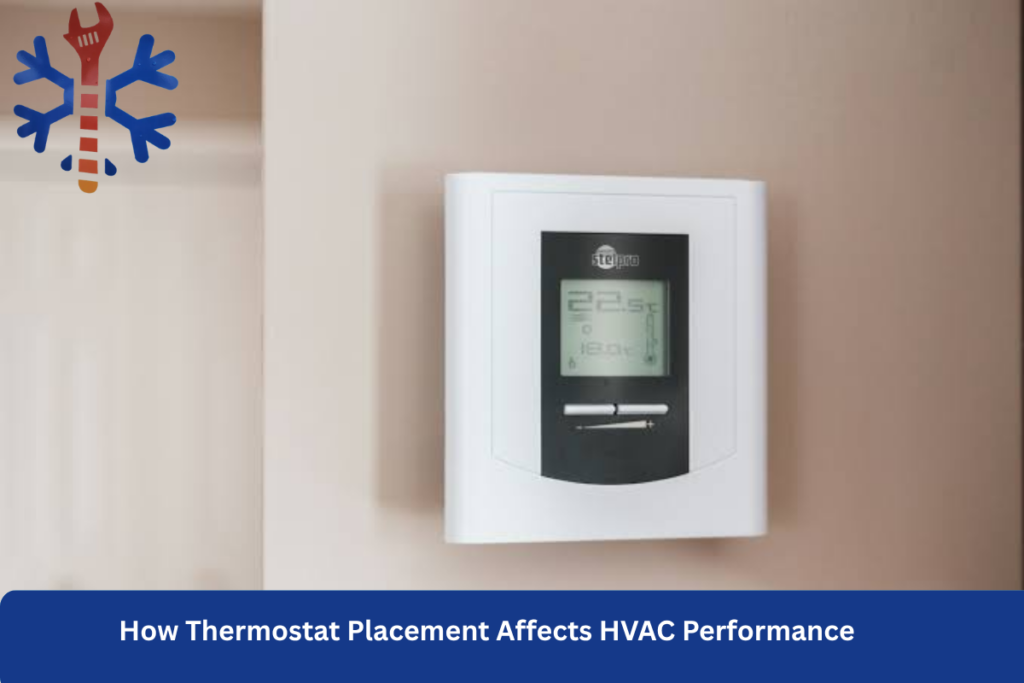
Your thermostat may be one of the smallest components in your HVAC system, but its location can have a surprisingly large impact on comfort and system performance. A thermostat measures the temperature around it and uses that information to tell your heating or cooling system when to turn on and off.
If the thermostat is installed in a location that does not accurately represent the temperature of the home, your HVAC system may respond to misleading readings. This can result in uneven temperatures, longer system cycles, unnecessary heating or cooling, and reduced comfort.
For homeowners looking to get better performance from their HVAC system, thermostat placement is an important detail that should not be overlooked.
Why Thermostat Placement Matters
A thermostat works by sensing the temperature of the surrounding air. Ideally, that temperature should be representative of the area where people spend most of their time.
However, different areas of a home can naturally have different temperatures. A hallway may be cooler than a kitchen. A room with large windows may become warmer from sunlight. An area near an exterior door may experience temperature changes whenever the door opens.
If the thermostat is located in one of these areas, it may measure a temperature that does not accurately represent the rest of the home.
For example, if a thermostat is exposed to direct sunlight, it may sense that the area is warmer than it actually is. The air conditioner could then continue running because the thermostat believes the home needs additional cooling.
This is why choosing the right location is an important part of HVAC installation and performance.
The Best Location for a Thermostat
A thermostat is generally best positioned on an interior wall in an area that represents the home’s typical living environment.
A suitable location should ideally have:
- Consistent temperatures
- Good natural air circulation
- Minimal direct sunlight
- Distance from doors and windows
- Distance from heating and cooling vents
- Distance from appliances that generate heat
Commonly, a central interior hallway or frequently used living area may be appropriate, depending on the home’s layout.
The objective is to place the thermostat where it can measure a relatively stable temperature rather than an unusually hot or cold area.
Avoid Direct Sunlight
Direct sunlight can significantly influence the temperature around a thermostat.
Imagine that the thermostat is mounted on a wall where sunlight enters through a nearby window during the afternoon. The sun can heat the wall and the surrounding air, causing the thermostat to detect a higher temperature than the rest of the home.
If your cooling system responds to that reading, it may run longer than necessary.
This can increase energy consumption and potentially make other areas of the home cooler than desired.
When choosing a thermostat location, avoid walls that receive strong direct sunlight for extended periods.
Keep Thermostats Away From Doors and Windows
Doors and windows can create temperature fluctuations that do not represent the overall indoor environment.
A thermostat installed close to an exterior door may detect a burst of hot or cold air every time the door opens. Similarly, a thermostat near a poorly insulated window may be influenced by outdoor temperatures.
These fluctuations can cause the HVAC system to respond unnecessarily.
Instead, a thermostat should generally be installed away from areas where outdoor air can frequently affect the temperature.
Avoid Placing a Thermostat Near HVAC Vents
Installing a thermostat directly above or near a supply vent can also create inaccurate temperature readings.
Conditioned air coming directly from the vent may be significantly warmer or cooler than the rest of the room.
For instance, during summer, cold air blowing directly toward the thermostat can make it believe the room has reached the desired temperature. The system may shut down even though other areas of the home are still warm.
During heating season, warm air from a nearby vent can have the opposite effect.
The thermostat should measure the room’s general temperature rather than the temperature of air coming directly from the HVAC system.
Keep It Away From Heat-Producing Appliances
Household appliances can also affect thermostat readings.
A thermostat installed near a television, oven, refrigerator, lamp, or other heat-producing equipment may detect additional heat that is not representative of the room.
Even small differences can affect when your HVAC system turns on or off.
This is particularly important in kitchens. Cooking naturally generates heat, so placing a thermostat near the kitchen may cause it to respond to temporary temperature increases.
Thermostats and Room Temperature Differences
One of the biggest challenges with thermostat placement is that one thermostat may control an entire home even though different rooms have different temperatures.
Factors such as:
- Room size
- Window placement
- Insulation
- Ceiling height
- Sun exposure
- Number of occupants
- Ductwork
- Airflow
can all influence individual room temperatures.
If the thermostat is located in a cooler part of the house, it may keep the HVAC system running until that location reaches the selected temperature, while warmer rooms remain uncomfortable.
Likewise, if the thermostat is installed in a naturally warmer area, the system may shut down before other rooms are adequately heated or cooled.
This is one reason proper HVAC design and airflow are important alongside thermostat placement.
How Poor Thermostat Placement Affects HVAC Runtime
Incorrect thermostat placement can cause an HVAC system to cycle differently than intended.
If the thermostat consistently reads a temperature that is too high during cooling season, the air conditioner may run longer.
If it consistently reads a temperature that is too low during heating season, the heating system may operate for longer periods.
Longer operation can increase energy consumption and place additional operating demand on HVAC equipment.
On the other hand, inaccurate readings can sometimes cause short cycling, where the system turns on and off more frequently than it should.
Short cycling can prevent an HVAC system from completing normal operating cycles and may contribute to unnecessary wear.
How Thermostat Placement Affects Comfort
Energy efficiency is only part of the issue.
A poorly positioned thermostat can also contribute to inconsistent indoor comfort.
You may notice that:
- One room is consistently too warm
- Another room feels too cold
- The HVAC system runs longer than expected
- The temperature seems different from the thermostat setting
- Some rooms take longer to reach a comfortable temperature
These problems do not always mean the thermostat itself is defective.
Sometimes the thermostat is functioning correctly but is located in a poor position.
Smart Thermostats Still Need Proper Placement
Smart thermostats offer useful features such as scheduling, remote controls, learning functions, and temperature monitoring. However, advanced technology does not eliminate the importance of proper placement.
A smart thermostat still relies on temperature readings from its sensors.
Some smart HVAC systems can work with additional room sensors, allowing homeowners to monitor temperatures in different areas of the home. These systems can be helpful for homes where temperatures vary significantly from room to room.
However, the main thermostat should still be installed according to the manufacturer’s recommendations.
Can Moving a Thermostat Improve HVAC Performance?
In some homes, relocating a thermostat may help provide more accurate temperature readings and improve comfort.
However, moving a thermostat is not always a simple DIY project. The existing wiring, wall location, HVAC controls, and system configuration all need to be considered.
If you believe your thermostat is positioned poorly, an HVAC professional can evaluate its location and determine whether relocation makes sense.
They can also check whether another issue—such as ductwork problems, inadequate insulation, restricted airflow, or an HVAC equipment issue—is contributing to uneven temperatures.
Other Factors That Affect Thermostat Performance
Thermostat placement is important, but it is only one part of the overall HVAC picture.
A properly positioned thermostat cannot compensate for a system with major airflow problems or inadequate insulation.
For reliable HVAC performance, homeowners should also pay attention to:
Air Filters
Dirty filters can restrict airflow and make HVAC equipment work harder.
Ductwork
Leaking or poorly insulated ducts can reduce the amount of conditioned air reaching rooms.
Insulation
Poor insulation can allow heat to enter or escape the home, making it harder to maintain a consistent temperature.
HVAC Maintenance
Regular professional maintenance can help identify issues that affect system performance.
Proper System Sizing
An HVAC system needs to be appropriately sized for the home. An incorrectly sized system can experience efficiency and comfort problems even with a properly placed thermostat.
Signs Your Thermostat Location May Be a Problem
Consider having your thermostat location evaluated if you notice persistent temperature differences or unusual HVAC behavior.
Potential warning signs include:
- The thermostat is exposed to direct sunlight
- It is located near an exterior door
- It sits above a heating or cooling vent
- It is near a kitchen or heat-producing appliance
- The HVAC system runs unusually long
- Your thermostat reading does not seem to match the room temperature
- Different rooms have significant temperature differences
These signs do not automatically mean the thermostat needs to be moved, but they are good reasons to have the system evaluated.
Final Thought
Thermostat placement may seem like a minor detail, but it can influence how your HVAC system responds to indoor temperatures. A thermostat that is exposed to sunlight, drafts, vents, appliances, or other unusual temperature sources may provide readings that do not accurately represent the rest of your home.
Choosing a stable, representative location can help your HVAC system make more appropriate heating and cooling decisions. It can also contribute to better comfort and more efficient operation.
If your home has persistent hot and cold spots or your HVAC system seems to run longer than expected, do not automatically assume the equipment needs replacement. Thermostat placement, ductwork, insulation, airflow, and other factors may all play a role.
A professional HVAC inspection can help identify the actual cause and determine whether relocating the thermostat or addressing another system issue would provide the best solution.
FAQs
1. Where is the best place to install a thermostat?
A thermostat is generally best installed on an interior wall in a frequently used area with stable temperatures and good air circulation. It should be away from direct sunlight, doors, windows, vents, and heat-producing appliances.
2. Can sunlight affect a thermostat?
Yes. Direct sunlight can warm the thermostat and cause it to detect a higher temperature than the surrounding living space.
3. Should a thermostat be near an air vent?
Generally, no. Air coming directly from a supply vent can influence the thermostat’s temperature reading and cause the HVAC system to respond inaccurately.
4. Why is my house a different temperature than my thermostat reading?
Several factors can cause this, including poor thermostat placement, ductwork problems, insulation issues, airflow restrictions, room orientation, and differences in sunlight exposure.
5. Can moving my thermostat save energy?
If the thermostat is currently exposed to unusual temperature conditions and providing inaccurate readings, relocating it may help the HVAC system operate more appropriately. The potential effect depends on the specific home and system.
6. Can a thermostat cause an HVAC system to run constantly?
An inaccurate temperature reading can contribute to longer HVAC operation. However, constant operation can also result from other issues such as inadequate airflow, duct leaks, poor insulation, an improperly sized system, or extreme outdoor temperatures.
7. Are smart thermostats better for HVAC efficiency?
Smart thermostats can provide scheduling and temperature-management features that may help homeowners manage HVAC use more effectively. However, proper installation and placement remain important for accurate temperature readings.