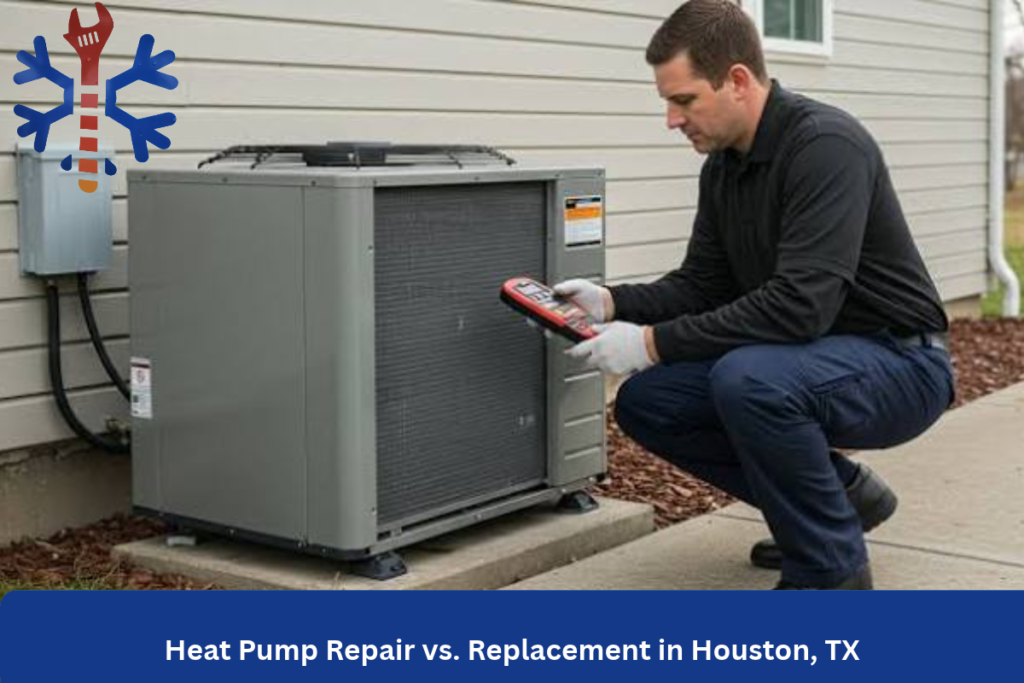
A heat pump is an important part of your home’s comfort, especially in Houston, where summers are hot and humid and winter temperatures can change quickly. Because a heat pump provides both heating and cooling, a problem with the system can affect your home throughout the year.
When your heat pump stops working properly, you may face an important decision: should you repair the existing unit or replace it with a new one?
The answer depends on several factors, including the system’s age, the type of problem, repair costs, energy efficiency, and how often you have needed service. A small repair may be all you need, while an older system with recurring problems could be more expensive to keep running.
This guide explains how Houston homeowners can compare heat pump repair and replacement and make a practical decision for their homes.
How Does a Heat Pump Work?
A heat pump transfers heat rather than creating it through combustion. During summer, it moves heat from inside your home to the outdoors. During colder weather, it reverses the process and brings heat indoors.
This allows one system to provide both heating and cooling. According to ENERGY STAR, heat pumps can serve both purposes and offer an opportunity to improve household energy efficiency when the equipment is properly selected and installed.

ENERGY STAR
However, like other HVAC equipment, heat pumps can develop problems over time. Electrical components can fail, refrigerant levels can become incorrect because of leaks, airflow can become restricted, and thermostats or other controls may stop working properly.
When something goes wrong, a professional inspection can help determine whether a repair is enough or replacement deserves consideration.
When Is Heat Pump Repair the Better Choice?
Repair is often the sensible option when the problem is limited, the system is in reasonable condition, and the cost is manageable.
Here are some situations where repairing your heat pump may make more sense than replacing it.
1. Your Heat Pump Is Relatively New
If your system is only a few years old and has been maintained regularly, replacement may be unnecessary. Many problems can be resolved by repairing or replacing an individual component.
For example, a faulty thermostat, a failed capacitor, or an electrical connection issue may be repairable without replacing the entire system. The exact solution depends on the diagnosis.
Before agreeing to a major replacement, ask your HVAC technician to explain what has failed and whether a reliable repair is available.
2. The Problem Is Minor
Not every heating or cooling issue indicates that the heat pump has reached the end of its useful life.
Some common problems include:
- A thermostat that is not set correctly or is malfunctioning
- A dirty air filter restricting airflow
- A tripped circuit breaker
- A clogged condensate drain
- A failed electrical component
- Outdoor coils that need professional cleaning
Some basic checks, such as checking thermostat settings and replacing a dirty filter, may be safe for homeowners to handle. Electrical repairs, refrigerant work, and internal component testing should be left to qualified HVAC professionals.
If a relatively simple repair restores normal operation, replacing the entire system may not be necessary.
3. Repair Costs Are Reasonable
Compare the repair estimate with the expected cost of replacement. If the repair is affordable and the system is likely to provide reliable service afterward, repairing it may be the better financial decision.
Ask the technician whether the repair addresses the underlying issue or whether other major components are also showing signs of wear.
A low initial repair price is not necessarily the best value if the same system is likely to need another expensive repair soon. Consider the full condition of the unit, not just the immediate cost.
When Should You Consider Heat Pump Replacement?
Sometimes, replacing an older heat pump is a better long-term decision than continuing to repair it. The following signs can help you determine when it is time to explore a new system.
1. Your System Is More Than 10 Years Old
Age is an important factor when deciding between repair and replacement. ENERGY STAR recommends considering replacement when a heat pump or air conditioner is more than 10 years old, particularly if it is becoming less efficient or needs frequent repairs.
ENERGY STAR
This does not mean every heat pump over 10 years old must be replaced. A well-maintained system may continue to operate reliably. However, older equipment may be more likely to experience component failures, and newer models may offer better efficiency.
If your system is aging, ask an HVAC professional to evaluate its overall condition and compare the cost of continued repairs with the cost of installing a replacement.
2. You Keep Paying for Repairs
One repair may be manageable, but repeated service calls can become expensive.
If your heat pump has required several repairs within a short period, consider the total amount you have spent. Frequent breakdowns may indicate that multiple components are wearing out or that the system has a more serious underlying problem.
Before deciding, ask your technician which components are failing and whether another repair is likely to provide dependable performance.
If the system repeatedly breaks down despite proper maintenance, replacement may offer greater peace of mind.
3. Your Energy Bills Keep Increasing
A sudden increase in electricity costs does not automatically mean your heat pump needs replacement. Dirty filters, duct leaks, thermostat settings, poor insulation, and refrigerant problems can all affect performance.
However, if your energy bills continue to rise despite regular maintenance, an aging or inefficient heat pump could be contributing to the problem.
A technician can check system performance, airflow, refrigerant operation, and other factors that affect efficiency. If the equipment is significantly underperforming, compare the expected operating costs of your current system with a properly sized, more efficient replacement.
4. Your Home Never Feels Comfortable
Does one room stay warm while another feels cold? Does your heat pump run for long periods without reaching the thermostat setting?
These problems can indicate equipment issues, but the heat pump may not be the only cause. Ductwork problems, inadequate insulation, air leaks, or incorrect system sizing can also affect indoor comfort.
Replacing the unit without addressing these issues may not solve the problem.
Before investing in new equipment, ask for a complete assessment of the heating and cooling system, including the ductwork and the home’s overall requirements.
5. The Repair Is Expensive
A major repair can make replacement worth considering, particularly when the equipment is older.
For example, if a heat pump needs an expensive compressor repair and other parts are also showing signs of wear, investing in the existing system may not be the best long-term choice.
A useful approach is to compare the repair estimate against the full installed price of a suitable replacement. Consider the equipment’s age, warranty coverage, likely future repairs, and energy use.
There is no single repair-cost percentage that works for every household. The right decision depends on the complete condition of the system and your budget.
Heat Pump Repair vs. Replacement: A Quick Comparison
| Factor | Repair may make sense | Replacement may make sense |
|---|---|---|
| System age | Relatively new equipment | Older equipment, especially over 10 years |
| Repair history | Few previous problems | Frequent breakdowns |
| Repair cost | Affordable, isolated fix | Expensive repair on an aging system |
| Energy use | Normal for the system | Persistent inefficiency after troubleshooting |
| Comfort | Restored with a repair | Ongoing problems despite proper service |
| Warranty | Repair or parts may be covered | Existing coverage is limited and major failures are costly |
Use this comparison as a starting point rather than a final diagnosis. A professional inspection can help you understand the actual condition of your equipment.
What Houston’s Climate Means for Your Heat Pump
Houston’s climate makes reliable HVAC performance especially important. Long periods of hot, humid weather put considerable demand on cooling equipment. During winter, sudden cold fronts can create a need for dependable heating.
A heat pump that struggles to cool your home during summer may have an airflow problem, a refrigerant issue, or a component that is no longer operating correctly. If it cannot provide sufficient heat during colder weather, the cause may involve the reversing valve, thermostat, outdoor unit, or another part of the system.
Houston’s humidity also makes proper cooling and moisture management important. A system that runs inefficiently or has drainage problems may affect indoor comfort.
Regular maintenance can help identify developing problems before they turn into larger repairs. Homeowners should replace air filters as recommended, keep the outdoor unit clear of leaves and debris, and schedule professional maintenance according to the manufacturer’s guidance.
If your heat pump is old or unreliable, consider arranging an inspection before extreme weather arrives. Planning ahead gives you more time to compare repair and replacement options without making a rushed decision.
What Does Heat Pump Repair or Replacement Cost?
The price depends on the specific problem, the equipment, and the work required.
Heat pump repair costs can vary based on the failed component, diagnostic requirements, labor, and parts availability. A minor electrical repair will generally involve different costs than a major compressor repair.
Heat pump replacement costs depend on system size, efficiency rating, equipment type, installation complexity, ductwork condition, and any electrical upgrades required.
Rather than relying on a general online estimate, request a written quote that clearly explains the recommended work and its cost.
If replacement is recommended, ask about:
- The equipment’s efficiency rating and expected operating costs
- Whether the system is correctly sized for your home
- Installation labor and any additional work
- Manufacturer warranty coverage
- Available financing options, if offered
- Maintenance requirements and future service costs
Comparing complete estimates helps you make a decision based on value rather than the initial price alone.
Why Professional Diagnosis Matters
It can be difficult to tell whether a heat pump needs a simple repair or a complete replacement just by looking at its symptoms.
For example, warm air coming from the vents during cooling mode could indicate a thermostat issue, restricted airflow, refrigerant trouble, or a more serious mechanical problem. Replacing the unit without finding the cause may lead to unnecessary expenses.
A qualified HVAC technician can inspect the system, test relevant components, check airflow, and explain the available options. You should receive a clear explanation of the problem and a cost estimate before approving significant work.
If replacement is necessary, proper equipment sizing and installation are just as important as choosing an efficient model. An incorrectly sized or poorly installed system may struggle to maintain comfort and may not deliver the expected energy savings.
Get Heat Pump Service in Houston, TX, From IROB Tech HVAC LLC
If your heat pump is struggling to heat or cool your home, IROB Tech HVAC LLC provides heating and cooling services for residential and commercial customers in Houston, TX, and other service areas. The company offers HVAC repair, installation, maintenance, and replacement services.
IROB – Tech, LLC
Its team can help assess heating system problems and discuss suitable service options based on your equipment and comfort needs.
Whether your heat pump needs a repair or you are considering upgrading an older system, getting a professional assessment can help you make a more informed decision.
Final Thoughts
Choosing between heat pump repair and replacement comes down to the system’s age, condition, repair history, efficiency, and the cost of the available options.
If your heat pump is relatively new and has a straightforward problem, repair may be the most practical choice. If it is older, frequently breaks down, uses more energy than expected, or needs a major repair, replacement may provide better long-term value.
Do not base your decision on age or repair cost alone. Have the system inspected, compare written estimates, and make sure any underlying ductwork or airflow problems are addressed.
For Houston homeowners, a reliable heat pump is important for staying comfortable through both summer heat and winter cold fronts. Taking action early can help you avoid unexpected breakdowns and choose a solution that fits your home and budget.